
Showing posts with label jamie mathieson. Show all posts

Tuesday, July 04, 2017

Moffat Falls Short (Again)


 Moffat Falls Short (Again)
Warning: Spoiler Alert!

I held off writing a review of the last three episodes of Doctor Who in hope the season would end on a stronger note. Alas, this isn't the case. Peter Capaldi's last series as the Doctor ends on a whimper and not a bang. It's not surprising when you consider the last two episodes were written (and I use the term loosely) by Steven Moffat.
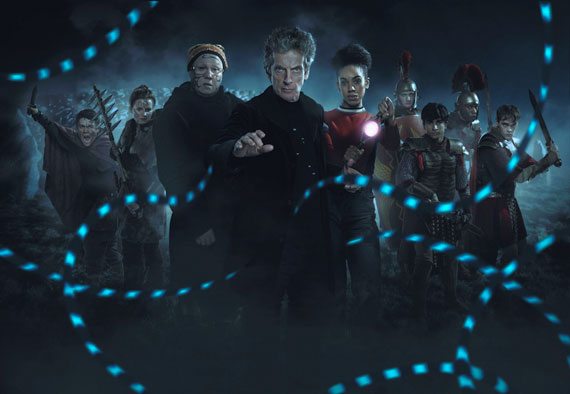

The third from last episode, The Eaters of Light, was about par for this season. We scratched out heads  wondering why aliens who ate light ran around in the darkness after human beings. Oh well... The Roman costuming was pretty good and the scenery of "Scotland" a nice change of pace. Definitely ranks with the mediocre episodes for the sheer amount of plot bunnies, but not totally a write-off with the good SFX. With some rewriting, it might have actually worked.

Then we come to the two-parter, The World Enough and Time, followed by the aptly named The Doctor Falls. Perhaps these two episodes should be collectively titled, Any Chance of A Coherent Storyline Falls Apart as the Doctor definitely "falls" into a big pile of steaming you-know-what.


The science part of the science fiction was missing in action throughout.  Bill winds up being shot and taken away  because the Doctor can't simply tell his companions to "Quick, run into the TARDIS and let's get out of here!"  (And why not take Bill into the TARDIS and take her someplace for surgery, huh?) Bill and the Doctor can't be together because there's too many floors in a space station between them, and time is happening faster at the back end than the front. This is a phenomenon noted by Einstein, but even a 500 story "building in space" wouldn't experience that much of a time dilation. It would have to be many light years in length for any noticeable effect. (Oops, that bothersome science of physics rears its ugly head again.) And finally, you take along your "prisoner" Missy out on a trip for what good reason, Doctor? Rehabilitation on the run?

Of course, if you live in a "building in space" you live in late 19th century houses and burn fossil fuels and blow things up all you like, never worrying about blowing a hole in the side of the space vessel thus allowing all the atmosphere to vent and be sucked into the nearby black hole. Yeah... My suspension of disbelief got so suspended that my eyes rolled into the back of my head and threatened never to roll back if I didn't watch something more intelligent within the next twenty minutes.

On the up side, the "Mondas Cybermen" were fun in their sock-puppet-with-a-lantern-0n-top way, and Nardole proved to be quite a hero and a gentleman. It was interesting to see John Simms channeling his inner Roger Delgado/Anthony Ainley as the Master again, complete with goatee beard, but the logic of how he came to be on the space station and why he'd help build Cybermen in the first place eluded us. (Didn't John Simms' Master end up being burned on a pyre after his Harold Saxon election-scheme fell through? It was confusing enough as to how he wound up as Missy, but logic doesn't seem to be necessary--or wanted--in a Moffat written script. Perhaps the Master faked his death then and went on to help Donald Trump's campaign?)


 The saddest thing character development-wise was how horribly the female companion was treated yet again. Correction: female companions. Both Bill Potts and Missy didn't exactly have ideal endings to their story arcs and both are made to suffer physically and emotionally first before they're dispatched. Moffat obviously wanted to do a "controversial kiss" scene in this last episode, and so he does with Bill and Heather, but it seemed tacked on and not very controversial. Bill's rescue scene is a bit of deus ex machina in implementation. We all saw that one coming, didn't we? 

It seems Moffat's idea of a happy ending for female companions is to 1.) Kill them and/or 2.) Regenerate them into an alien (or into a walking zombie in Clara's case). Either way, the girls never get to return home. Obviously, he feels women characters have to be punished by exile from Earth. Ow. He isn't making any brownie points with feminists once again.

The Doctor's "fall" isn't so much a classic Disney-death-by-falling as much as a fall-on-your-back-in-a-big-explosion (after doing terribly stupid and heroic hand-to-hand combat with Cybermen in a holographic meadow inside a space station, no less) fall. At least the Doctor is going out in a noble fashion, trying to save others by fighting the bad guys. But Moffat doesn't know when to stop there, and so we have a repeat of David Tennant's  Tenth Doctor's "I don't want to go!" whiny regeneration started. We'll have to wait until Christmas to see how whiny and clingy to Peter Capaldi's gorgeous body the Twelfth Doctor will be. Thank goodness it looks like it's going to be a "Two Doctors" special with a return of David Bradley as the First Doctor. 

Until Christmas, we'll be holding our breaths and crossing our fingers for a decent final send off for Peter. I'll be asking Santa that it be a story written by either Mark Gatiss or Jamie Mathieson. Please?

What do you think of these last episodes of the Peter's final year as the Doctor? Write your comments in below.

P.S. I'm looking forward to next month when my novel Loving Who will be released by Devine Destinies Books. (The female companion experiences a happily ever after ending, too!)


Thursday, May 18, 2017

The Doctor as Labor Leader

 
The Doctor as Labor Leader
(Attn: Spoiler Alert!)

We're just back from Marcon 52 and trying hard to catch up with things, so this week's review wasn't the first thing on my to-do list. I put off watching the latest Doctor Who episode for a few days (so I could make myself finish several projects first), and now I wish I hadn't. 

I find it amazing how my "day job" of being the editor of Our Revolution Continues dovetailed nicely into this week's episode, Oxygen. Both blogs are on the topics of worker/employer -- or more accurately slave/master-- relationships. To see what I mean, check out my piece at the O.R.C. blog, How to Build a Better Slave, er Worker. The fact that most human beings don't recognize how they're being manipulated and used by the oligarchy isn't a new concept, but seeing it portrayed in an effectively sinister way on Doctor Who really surprised me. Kudos to writer Jamie Mathieson, known for penning the better scripts in Peter Capaldi's first season, for once again writing a worthy episode for Peter's Doctor.

 Oxygen is quite a unique screenplay. The overt theme of the story is particularly intriguing, considering the accusations the BBC head  made thirty years ago against the producers of Doctor Who for  putting on a "leftist show." It got the show cancelled, so is this "leftist bent" made during the Theresa May leadership going to result in the same thing, or is the Beeb more interested in ratings rather than politics this time around? I think they're in it for the money, so a story theme about how human life is cheap and easily disposed of by those with the power and wealth is even more poignant.


But it wasn't all just politics--the "spacesuit zombies" were pretty creepy. You don't expect something that's supposed to protect you like a spacesuit to try and kill you. Nice touch linking the capitalists' greed to overtly killing their workers/slaves. At least the worker/slaves at the Chasm Forge understood they had a limited supply of oxygen, but they expected their masters to provide more. Too bad, so sad their corporate masters felt the workers weren't worth giving the "benefits of breathing."

There was definitely more "meat" to the plot this time out, and more Nardole as well. I've been wondering if Matt Lucas was going to get more lines, and this story featured him well. He's a loyal and conscientious companion, and he's trying to keep the Doctor on task--which we all know isn't an easy thing to do. How Nardole as a character will develop in subsequent episodes intrigues me and will keep me watching.


Bill in this episode plays the innocent in space, trusting that the Doctor and a spacesuit will protect her from the evil of the "zombies" and the faceless corporate oligarchs. The Doctor risking his own sight to save her--and then seemingly risking her life to save her again later--was quite dramatic. It's great to see Peter Capaldi playing a heroic Doctor who is willing to lay down his own life/health for the safety of his companion without hesitation. We've had enough of the "darkness" Steven Moffat tried to infuse into the first two seasons of Peter's tenure. 
 
Let the Doctor be a hero and his companions worthy aides in his fight to save humanity against the evils in the universe. Please, Doctor, come to Earth and be our labor leader! Save us from the blind greed of our corporate masters who take and take from the working poor to fill their bloated off-shore bank accounts!

What do you think of Peter Capaldi's Doctor and  the episodes so far? Leave your comments below.


P.S. It's sometimes uncanny how you can predict the future, even if you're not a Time Lord... While I was doing some edit work on my upcoming re-release of  Leaving Who, I realized I'd coin the term "The Mistress" many years before Steven Moffat had. Maybe I time traveled and didn't realize it?

Sunday, October 18, 2015

The Story That Tried (on New Doctor Who)


The Story That Tried
***Spoiler Alert!***

Hey, Vikings! It's been fifty years since we last seen them on Doctor Who, so Jamie Mathieson's script idea was a welcome breath of fresh air we thought. We loved his last season's scripts for Mummy on the Orient Express and Flatline, both which are possibly the best written episodes in several years. Then we caught the co-writer's name--Steven Moffat, the show's producer who seemingly feels compelled to write or re-write every episode. Oh, well... maybe Jamie's magic will outshine any alterations Mr. Moffat makes to the story?

When people write together as a professional writing team, the reader/viewer usually can't tell where one author starts writing and then stops and his or her partner begins writing. (For instance, my husband and I just recently sold a jointly-authored Y.A. sci-fi novel series--more news to come!) Alas, there were several things that jumped off the screen in The Girl Who Died that just didn't seem to mesh as well with the overall writing-style. I suppose these rough bits were Moffat's additions? The first thing that really jarred was the title itself. Like last week's introductory scene, where the Doctor explains the entire story premise upfront, the title sort of gave away the "big secret" that a girl was going to die. Since it probably wasn't going to be the companion character, that left Ashildr, the Viking girl who helps the Doctor and Clara. Talk about killing all the mystery and tension!

The Vikings had a lovely village set, and it was great to see the Doctor materialize in another place rather than contemporary London or Wales again. Since the Vikings ruled an area from North America to Russia and south to Turkey, the village could have been anywhere within their realm. However, one thing jumped out that shouldn't have been there: the horns on the helmets. 


According to my daughter, who attended graduate school in archaeology at the University of Southern Denmark and is a professional Viking re-enactor in Europe, Vikings warriors never wore helmets with those big longhorns on the top. That's a fallacy perpetually kept alive by Bugs Bunny's famous What's Opera, Doc? and Asterix and Obelix comic strips. Take it from me, they just didn't, and my daughter can provide the historic proof to back it up. Also, the modern belt buckle I spotted on Ashildr's costume (why was she wearing pants and not skirts like Viking women usually did?) wasn't found in that time period, either. Vikings used beautifully forged decorative pins to hold their clothes together in the places that weren't tied or sewn together. One would hope the BBC costume department had enough of a budget to call an expert in Viking clothing to double-check these things, but perhaps Mr. Moffat thought such anachronisms funny?

The "Mire" villains reminded us of Sontarans or the Judoon from previous seasons. "Odin" looked like the pirate captain in the Douglas Adams' script The Pirate Planet in the Key to Time series during the Tom Baker years, too. The Doctor's odd nasty remark that "God never makes an appearance" (like he does in Monty Python and the Holy Grail) to explain the appearance of the aliens to the Viking villagers sounded more like an atheist's complaint than something the character of the Doctor would say, as he generally respects other cultures. Once again, it sounded like an addition made by another writer with an ax to grind--Mr. Moffat, by chance?

Peter Capaldi seemed to be channeling bits of Tom Baker--along with Patrick Troughton and Jon Pertwee--in his performance. His Troughton-like plaid trousers looked a bit out of place with his "'90s grunge band look" hoodie and t-shirt under the jacket. Last year's more sophisticated style of dressing seemed to suit him better than the uber-casual teenage boy look he's sporting this season. 

The Doctor's more warmhearted approach (he actually hugs Clara without prompting) is a nice touch this time out, but his unusual decision to re-animate "the girl who died" seemed completely out of character for him. The Doctor usually insists that the time line shouldn't be altered for anyone and that death is final.  (If it isn't, why has he not gone back to save his companion Adric who died during his fifth incarnation?) One suspects neither the girl's death nor her resurrection was included in the original story idea Mr. Mathieson pitched, and that it was added to give a guest appearance slot to Maisie Williams for two episodes as a ratings gimmick. 


The "reason" for the Doctor changing his mind about bringing her back to life came across as an weak attempt to appease fans.  Some must be dying to know why the Doctor looks very much like the Roman father from the 2008 Fires of Pompeii episode, but it seemed contrived. After all, Colin Baker appeared in the fifth Doctor episode Arc of Infinity as Maxil, a Gallifreyan guard, and we were never given an explanation for why the sixth Doctor had Maxil's face, and the audience handled it just fine. Yet another example of an alteration made to Mathieson's original script?


We're given hints that poor Ashildr is now immortal, and she's going to hate it and go insane since she will outlive all her loved ones. It makes sense, but then again, Captain Jack Harkness is also an immortal Doctor Who character who hasn't gone insane, and he's outlived everyone and died horribly numerous times to boot. (He just keeps coming back no matter how many little pieces he's pulverized into, poor man!) Why is Ashildr different? And does this mean that Jack has a chance to come back on the show to help a fellow immortal cope with the meaning of her existence? Captain Jack fans are anxious to know!

Over all, The Girl Who Died seemed like one long set-up for its second part/sequel next week. If some of the "additions" to the script had been left out, and the story focused more on the Doctor and the other characters, perhaps it would have been stronger. So far this season's writing hasn't lived up to the quality of  last season's non-Moffat written episodes--not including the dreadful Moon/Dragon's Egg "worse episode ever" as it's been called. (We suspected it had been written by Moffat as well.) If Jamie Mathieson is allowed to write for Doctor Who without a "co-writer" tampering with his story ideas, perhaps the writing will improve. 

Or not. Let's hope they keep trying.


What do you think? Please leave your comments below. And check out my reviews of earlier episodes of this season of Doctor Who:

google-site-verification: googlec9fe367ac800d499.html