Showing posts with label 99%. Show all posts

Sunday, August 30, 2015

Book Review: Soul of a Citizen

Soul of a Citizen: Living With Conviction in a Cynical TimeSoul of a Citizen: Living With Conviction in a Cynical Time 
by Paul Rogat Loeb
My rating: 5 of 5 stars

Soul of a Citizen is a must-read for every intelligent person on the planet. I found my copy in a charity book pile and picked it up because of the title. Once I started reading, I couldn't put it down. It is more relevant and quotable today than it was when it was published in 1999. No kidding--you'll believe Loeb wrote this masterpiece just yesterday so prescient is his vision. It's that timely. Every home should have this book on their shelf for quick and easy reference.

Loeb inspires and motivates us to get off our backsides in Soul of a Citizen and get out into the world and fight for what we believe in. He deftly illustrates his points with examples of everyday people taking action who never believed they could do such a thing. These aren't "professional activists" or superheroes. These are folks who never thought they could make a difference in their community, their state, or the world at large, but who, nevertheless, found the courage to stand up and speak out for what they believed in and ended up making a difference for the better. Sure, times can be rough and not every effort will be met with immediate success, but when we sit back and do nothing we effectively kill off a piece of our soul Loeb warns. And the world is diminished that much more.

So, ignore the "insouciant smirks" or the "snark" (my term) that our society dishes out via the media whenever it tries to convince us that anything one person (or a group united for a good cause) attempts can't possibly make the world better. This snark, smirk or institutionalized cynicism has been perpetuated by the billionaires and millionaires for the past 40 years to keep us in our place. We all have been living under its soul-destroying cloud for so long that we've internalized it and come to believe its falsehoods. Worse yet, these oligarchs enjoy our "learned helplessness"--or should it be called "learned hopelessness"? The masses are lost in the consumer-driven culture and given up, filling their lives with empty bread (Starbucks?) and circuses (smartphones). Ordinary people discouraged and despairing won't take action to fight the wrongs made by greedy corporations and bought-and paid-for-politicians. No, we'll just sit and stare at our computing devices and throw in the towel and not fight back. The billionaires will just stuff more money in their offshore bank accounts as they send our jobs to China and accept their corporate welfare checks from the government...

Sound familiar? Want it to stop? Want to make the world a better place for all of God's creation and not just the 1%? Then get off your backside and find Soul of a Citizen in your local library, bookstore or online. Get it and read it. Today. Because tomorrow is the beginning of a whole new world that we can all be proud of because we worked together to make it happen.

#FeeltheBern


View all my reviews

Friday, August 23, 2013

Elysium: Denying Healthcare as Crowd Control


Elysium: Denying Healthcare as Crowd Control


My husband and I are huge science fiction fans. We couldn’t wait to see Neill Blomkamp’s Elysium this summer. (http://en.wikipedia.org/wiki/Elysium ) Sure, there were other sci-fi action-thriller movies to be seen, but the enticing trailer for Elysium itself, and the fact of how much we enjoyed Blomkamp’s District 9, promised more for our always-stretched movie dollar.


Elysium as a film didn’t disappoint, but its premise posed many more questions—disturbing ones—than it attempted to answer. And, several weeks later, it keeps me awake at night.


First off, why would the near-future world posited in Elysium, filled with advanced technology that can cure disease and injury almost instantaneously, co-exist alongside a planet filled with such crippling poverty? It just doesn’t make sense. Or does it?
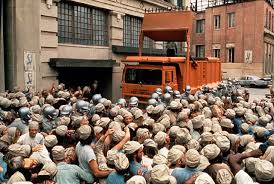
 

In my opinion, a near-future scenario of an Earth on the brink of collapse was last successfully realized on screen in the 1973 classic Soylent Green. (http://en.wikipedia.org/wiki/Soylent_Green)  The Millennial Generation may laugh at the idea of a heavily overpopulated planet, degraded and polluted by trying to feed too many mouths and ruled by a small, secretive elite of the mega-wealthy, but they’ll have to realize that the Pill and abortion on demand weren’t freely available in the first half of the twentieth century. The assumption that we’d have way too many humans on the planet by the turn of the twenty-first century wasn’t so hard to put out of mind in 1966 when the Harry Harrison award-winning novel Make Room! Make Room! (which the film was based upon) was published. The thought of overpopulation and a dying planet posed a very real threat in the minds of the powers-that-be.


In Soylent Green, it is food—the very essence of how a living, growing organism stays alive—that is manipulated and managed to keep the masses in check. No food source—no living. Furthermore, the masses are indoctrinated by the elite that it is both noble and proper for them to commit suicide in order to thin out the ranks. There is no need for a heavily armed-presence or too much overt violence (although there are some telling riot scenes where police brutality is evident) to control the masses if the masses do the killing and self-killing themselves as they are slowly starved to death and talked into suicide.


After all, the elite classes only need a handful of human workers at any one time (who are much cheaper to “create” than androids or robots) to serve, manufacture things, run machinery, have sex with, etc. The poor, starving billions are as easily used, abused, and disposed of as paper cups—and self-destructing paper cups at that.


How convenient for the one percent! Give the poor a few guns, feed their prejudices against other groups who look or act differently, and they’ll take care of the problem for themselves. Brilliant.


Once the idea of crowd control, of implementing an efficient way for those at the top of the food chain to keep the masses in check, is discerned in Elysium, then more of the unanswered questions present and explain themselves. Although it is set only a mere one-hundred-forty-one years into the future, Elysium hints that the advancement of technology in the fields of space travel, medicine, manufacturing, and computers has been able to solve many of the more pressing problems we experience currently in the world of 2013. With the advanced technology evident in the massive space-habitat ring of Elysium itself and the Med-Pod that cures all disease, obviously human beings in the future are capable of great things.



So, why would there be a need for slums and for little girls to die of leukemia? Why would there be a need for millions of workers working at slave wages and under extremely unsafe conditions, as Matt Damon’s character Max does? Why motivate these slave laborers with a carrot-and-stick promise that if they prove themselves “good workers” they might just be able to afford a ticket to go to Elysium one day just as Max has wished for since he was a boy?


Ah… could it be? It’s that control thing, yeah?


Once the motives of pure greed and a naked desire to execute absolute power are eliminated from Elysium what else is there to explain the plot? Jodie Foster’s character, Secretary of Defense Delacourt, is painted as a military-dictator wannabe, a fascist-in-training, but there’s more to her—and her fellow citizens of Elysium—than pure greed and hidden-fascist dogma. After all, they all dress well, speak well and drink the right wines. In spite of their sanitized, movie-star-glamorous lives, their motives to keep Elysium to themselves are much more base. They want—no, it’s more likely need—to possess total control over the billions who dwell below them on the one planet where they receive the raw materials needed to maintain and grow their utopian world in space.


They, the elite, the one-percenters, secretly acknowledge that they cannot live without the input of the ninety-nine percent, but they dare not let on how dependent they are upon the unwashed and self-unaware masses. To do so could mean that the masses would demand equal access to all the blessings of technology and healthcare… and once the masses have access to healthcare and a decent lifestyle, would they consent to work for next to nothing?


Can it be that simple? How could the Elysium elite motivate their slave laborers without threatening them with the stick of no healthcare access? They do possess advanced military technology, and Delacourt demonstrates she isn’t afraid to use it. But like most fascists, Delacourt and the wealthy citizens of Elysium realize how difficult it is to maintain crowd control through the use of weaponry alone. Even well-paid mercenaries, such as Sharlto Copley’s sociopathic character Kruger, can’t be trusted to serve their masters all the time.



To maintain crowd control, the elite of Elysium have only one option: denying healthcare in order to convince the slave workers of Earth to keep themselves in line. The elite only has to indoctrinate the masses with the idea that if they become soldiers in the elite’s cause then they are dying for a greater good—not for increasing the profit margins of the one-percent. (Overtones of Soylent Green and suicide centers, but something else there rings a bell. Hmm.) 


The elite can dangle carrot-like promises in front of the masses, “You’ll only suffer for a little while if you go along with our plans,” and expect most to believe the lie because it is as attractive as the beautiful green wheel in space rising above their dust-brown slum cities. “Some day soon you’ll become one of us and have access to the miracle of healthcare for you and your families if you keep your fellow slaves from agitating for equal access to it now.”


Wow. And here I thought I was reviewing a movie. No wonder I can’t sleep at night.


My British husband calls it the “I’m all right, Jack” syndrome. As long as you keep your head down, allow your one-percent masters to call all the shots, encourage your fellow slave laborers to off themselves in desperation to survive, you’ve made it. You’ve survived long enough to gain a chance at joining the well dressed citizens of Elysium. (But there’s no real guarantee they’ll let you into their exclusive country club, is there?)  You’ve made it…but at what price?


I hope only the price of a movie ticket. Go see Elysium. Discuss it with others. And please leave your comments below.

Monday, October 01, 2012

The Fixer-Uppers now available!


At long last, my contemporary romance novel, The Fixer-Uppers has come again! The real irony is that I wrote the first draft of this story many years ago (and have since updated it and it's been through several edits, so it's better than ever), but today I find myself in a similar situation as the main characters! 

The crux of the story is two hard-working Americans (definitely the 99%) trying to get by and finding love in the process. The hero even suffers an eviction from his apartment. Talk about life imitating art! I now can fully sympathize with Mike having his worldly goods tossed out on the street. Luckily for him, the heroine Cassie takes him in and gives him a room in her home, and a happy ending is assured.

If you have a Kindle or other e-reader and enjoy good ol' fashion romantic comedies, then you'll enjoy this book. You can even feel safe giving it to a loved one as a birthday/Christmas gift, too. Just think--you'll be helping a struggling author out by buying her book, so you can feel it was worth the couple of bucks you spent. 

The Fixer-Uppers


Can a single mom find happiness on a blind date--or at least dinner with a male who can cut up his own food? Cassie and Mike believe they're "in like" not "in love." But when down-on-his-luck Mike is evicted, Cassie takes him into her home. Mike starts fixing everything from window screens to little boys' broken hearts. Will Cassie let him fix hers?

An excerpt: Mike teaches Cassie how to act out her frustration at her ex by throwing darts at a picture on a dartboard.

He smells of paint and newsprint—and male. Cassie closed her eyes. She could feel the overpowering warmth and strength of Mike’s muscles through the thin fabric of his shirt as she stood entranced next to him. What if she turned around this instant and pulled him into her arms instead?
Her sluggish mind was wandering she realized. She blinked and shook her head to clear the cobwebs.


“Oh—kay. I’m ready.”
“Then let ‘er rip.”
The dart hit the imprint of Mike’s pinkie.
He grinned. “Not bad. Now give Jack a stab right in the heart. Aim for the middle.”
Cassie screwed both eyes shut and sent the dart flying with a passionate fling. A loud thump broke the silence.
“Oh, no—can I open my eyes now? Did I break something?” she asked timidly.
Mike let out a long whistle. “Look what you did.”
She cautiously opened one eye. The dart had hit dead center.
“Yippee!” Cassie jumped up and down. She gave Mike an impulsive bear hug, almost knocking the breath out of him. “Let’s do it again!”
Mike’s gaze fixed on her mouth. “Yes, let’s do—”


The Fixer-Uppers is now available in all e-book formats at Devine Destinies Books:

Tuesday, June 12, 2012

Do People Really Matter?

It's been a tough year for a lot of us. We're unemployed, underemployed, without health care, without health insurance and without hope. We're treated as if we don't exist by those in power. Corporations and the mega-rich seem to always get their way. It does make one wonder:


Do people really matter?

By "people" I mean human beings. The reason I ask this is because of an intriguing statement I heard on a radio program this evening. I stopped to listen to it since the show's host said this gentleman had the answers as to why so many of us who are constantly applying to jobs and desperately looking for work can't seem to connect with employers. It's not that employers don't have jobs--this individual assured us they most certainly do. And then the expert stated the reason why more of us don't get hired is this:


"No one qualified applies for the jobs."


Huh? There are millions looking for work. Surely some of these people have some job skills, right?

The expert then gave the example of a corporation that recently needed to hire an engineer--pretty much an entry level position. 25,000 applications were submitted for that one opening. That's the population of many small cities. And guess what? No one qualified applied for the job according to the corporation. Not a one. What are the odds of that happening?


In fact, there were probably many qualified individuals who applied for the position, since the self-same corporation had downsized  recently and had eliminated similar positions. A few  ex-workers probably re-applied to work at their old firm, right? Why were there no "qualified applicants"?


Answer: the computer that scanned the 25,000 applications told the corporate big-wigs that there were no qualified applicants.

Obviously, those that have the power to hire are more apt to believe a machine than their own senses. Because if those corporate types had kept on the human beings who staffed their human resources (as opposed to computer resources) department, the bosses would have been given a large number of qualified applicants to consider for the engineer opening.


But in the end, the big-wigs decided they didn't need human beings to help make hiring decisions. Computers could make these decisions just as well, if not faster. After all, human beings expect to be paid a wage and they might want such horrendous things as medical and dental insurance and sick leave. Can't have that, can we?

So, do people really matter? I guess not--at least not until computers start demanding days off with pay and health insurance.


Wednesday, February 22, 2012

The Mitt Romney Memorial “Bring out the Poor Vote Movement


Hello again. Yes, it’s me, the “mad-as-hell” woman who in my first video made a $2 bet with Mitt Romney that he’ll never make it to the White House. 


February in the US is Black History Month. Living in the St. Louis area, I’ve visited the Old Courthouse and stood in the courtroom where Dred Scott sued for his freedom. In its 1857 decision regarding Scott’s case, the Supreme Court held that blacks could not be citizens of the United States.


Essentially the court said that Dred Scott and his family were property and not human beings. They were things to be used by the rich without monetary compensation and without thought to their dignity and self-worth. 


Hmm… A parallel to the plight of today’s working poor might be in order here. Funny how the more things change, the more they stay the same.


In July 1868 the Fourteenth Amendment was passed giving the right to vote to all male citizens regardless of race. It seemed too good to be true the newly freed slaves. Of course, most good things come to an end all too soon.
By 1896, the Supreme Court held that the states could impose segregation so long as they provided similar facilities—the formation of the “separate but equal” doctrine.  It wasn’t until 1954 that the Court ruled in Brown v. Board of Education that segregation in itself was harmful to black students and, therefore, unconstitutional. The Civil Rights Movement had begun.


Leaders like Martin Luther King Jr. “had a dream” and stuck to it in spite of difficulties. So by the time I started first grade my reading materials featured stories featuring children of all races, as opposed to my older siblings’ boring  all-white “Dick and Jane” stories.


From the struggle of Black Americans we learn that when rights are systematically taken away from most economically and socially disadvantaged, step by step these rights have to be restored—hopefully once and for all.


In honor of the Fourteenth Amendment and the protections it gives to all Americans, I propose that we pledge ourselves to a new endeavor to help restore our rights as citizens… I call this, “The Mitt Romney Memorial Bring out the Poor Vote Movement”.  


If the poor don’t matter to fat cat politicians, because the poor are not seen as a large voting bloc, then maybe it’s time we change that perception. Maybe it’s time we help the poor be heard via the ballot box. Perhaps it’s time that these millions of struggling Americans are seen as human beings worthy of dignity and compassion instead of easily forgettable slaves to be used, abused and then downsized when CEOs decide to give themselves million dollar bonuses instead of investing company profits for the well-being of the workers.


Here are just a few ways we can help “Bring out the Poor Vote”:


1.      Let’s register to vote those who have been displaced by failed mortgages, lost homes and jobs and other financial hardships. If you know of someone who is living on their parents’ sofa or a family sharing a home with another family, perhaps they’re not registered to vote in the district they’re living in currently. We need to make sure these displaced voters are eligible to vote come November. So please help these struggling Americans get the necessary paperwork together in time to receive their voter’s cards. It’s a great way to meet your neighbors.

2.      Volunteer to babysit for a single mom. It’s a great way to help working parents who aren’t able to easily get to the voting booth with little ones underfoot. I’m sure they’ll appreciate having free hands to mark their ballots and a few minutes of respite from demanding little ones. You might even make some new friends!

3.      Help organize transportation for those without any means of getting to the polls. Distances between polling stations in suburban and rural areas can be quite large, so offer your neighbors a lift there and back again. It’s yet another way to make some new friends.

Yes, it’s time we as the 99% made our voices heard. We’re mad-as-hell and we’re not going to take it anymore. Let me know what ideas you have for helping to Bring out the Poor Vote, and I’ll keep you informed as to when Mr. Romney pays his $2 bet.

Thursday, February 02, 2012

My Rebuttal to Mitt Romney’s “I'm-not-concerned-about-the-very-poor” comment


My Rebuttal to Mitt Romney’s “I'm-not-concerned-about-the-very-poor” comment:


This is a time people are worried. They're frightened. They want someone who they have confidence in. And I believe I will be able to instill that confidence in the rich American people. And, by the way, I'm in this race because I care about rich Americans.  I'm not concerned about the very rich. They have plenty of safety nets. If any need repair, they’ll be able to effectively lobby Congress to fix them.

I'm not concerned about the very poor; they're doing just fine. I'm concerned about the very heart of the American people, the 1 to 5 percent of rich Americans who right now are struggling with paying more than 15% in income tax, and I'll continue to take that message across the nation. 


Thank you Mr. Romney for making it oh-so-clear where your political leanings lie… Very near your wallet.

We at the Mad-As-Hell Party are focused on all struggling Americans. We could focus on the rich. But that's not our focus. We focus on the very poor because so many fat cat politicians who make $21 million a year don’t focus on them enough. Maybe it could be they’re too busy making $10,000 bets with each other.

Mr. Romney, I’d like to make a bet with you. I bet you that you will not make it to the White House in 2012. Hmm—how much would you like to bet me, an underemployed, struggling-to-survive American? Ten thousand? Well… let’s see what I have in my wallet to bet… two dollars. I look forward to your two dollars very soon, Mr. Romney. It’ll go a long way to fix my “safety net”.

Sincerely yours, 
Cindy A. Matthews


If you’d like to comment on my rebuttal, please do so in the comments section below.  And you can join the discussion on Facebook at The Mad-as-Hell Party page. Thank you.

Wednesday, January 25, 2012

It's Official--The Middle Class is No More


It’s official--the middle class is no more.

When the icon-of-middle-class-America starts lowering its prices and changing the lay-outs of their stores, you know that an era is passing.

JC Penney announced that as of February 1, 2012, it will permanently slash all of its prices by at least 40% with what their CEO Ron Johnson said is “a sweeping overhaul of its stores and strategy.” Soon middle-class America will discover that Target and Wal-Mart aren’t the only cheap department stores on the block.

I don’t know whether to be thrilled or sad. I’m thrilled to know I no longer have to wait until the “after Christmas sales” (which, of course, began before Christmas these past few years) to find bargains. But deep down I’m feeling confused and more than a bit sad. It’s sad because, if you add Sears’ recent announcement that it will close many of its retailers, you’ll realize there’s no longer a range of department stores in between the lowbrow of Wally World and its ilk and the upper-crust snobbism of the Lords and Taylor/Saks 5th  Avenue type of stores. 


JC Penney won’t be able to maintain its high quality of clothing and merchandise, I fear, because with dwindling price tags, how will the executives continue to bring home those big paychecks they’re used to from the profits? They’ll have to start stocking the cheap, made-in-China crap that fills Wally World’s shelves. Possibly JC Penney will be able to keep their quality products available at these discount prices, but the only way is probably by slashing their employees’ rate of pay by 40% and hiring only part-time and seasonal workers (while downsizing the number of full-time Penney’s employees still on the books). Either way, this news doesn’t look like a happy ending for a lot of folks.

Underpaid/underemployed/unemployed Americans will be forced to shop at stores with low quality goods, and the “fat cats” (who live off the interest of their large offshore bank accounts) will continue to shop at their high end designer fashion boutiques. Nothing new there, really, but for a while at least some Americans thought they had the right to be called “the Middle Class”.

Face it folks, most of us reading this blog are in the bottom 99% with no hopes of ever becoming part of the top 1%. Do the math, look at your checkbook, and tell me where you’ll be shopping (if you can afford to) next week.

(For another example of how 99% of Americans have been taken advantage of, read:  Emblematic of 1 Percenters, Cooper Tire Punk’d Workers)

How are you coping with the ever-widening gap between "haves" and "have-nots"? Any tips on where to find a decent paying job? Please share your comments and concerns below... Perhaps if the 99% sticks together we can make the world a better place.

(Please join the discussion on Facebook at the Mad-As-Hell Party page, too.)

Monday, December 12, 2011

Fighting Cancer: Occupy Healthcare


Mom’s started back on her chemo treatments this past week. She’s with a new doctor now. The only explanation she’s received about why Medicare denied her treatments over a month ago was a typo… A simple typo, made by the doctor’s office on the paperwork that was sent in to Medicare. For over a month she waited patiently, losing strength and weight. Finally, she took the advice of a cancer advocate and found a new doctor who said he’d treat her. Suddenly, her former doctor’s office called and admitted to the mistake and told her she could come back tomorrow and resume her chemo, but by then Mom had already made up her mind to switch doctors.

And still no one has apologized or explained why she couldn’t have continued her chemotherapy as planned while the various parties discussed the discrepancy in the paperwork. A human being’s health and well-being were completely forgotten in all this mess—a mess that she didn’t cause, doesn’t understand, and was never in any, way, shape or form responsible for.

So… who is responsible? She had made such strides in her first  two months of chemotherapy and was actually starting to feel somewhat better and her appetite had improved. She hadn’t felt the need for any painkillers until this past week, when the pains that had first alerted her to the cancer returned. Who is responsible for Mom’s declining health? Who is responsible for this debacle?

I guess the answer to who is responsible depends on what side of the “99% versus 1%” argument you favor.

If you’re in the 1%: “Of course it’s the 77 year old lady’s fault. She would have never allowed herself to become sick in the first place if she had her own vegan chef  and bimonthly trips to the health spa. Barring that, she should have more than enough money in the bank to purchase the best of health insurances and the best of health care… No depending on government programs necessary, unless you already have the politicians in your pocket. And if anyone causes you any guff—well, that’s what expensive lawyers are for. That’ll get you results. Good manners? Patience? Pfft! Those are for those who can’t afford to have their own way!”

If you’re in the 99%: “I followed all the rules, paid Social Security taxes all my life. I asked my doctor why I was experiencing these horrible pains in my abdomen, and he said he could only do certain tests because that’s all Medicare/my insurance would pay for and those tests didn’t give him any results he could interpret, and I can’t afford to pay out of pocket for more testing…”  OR  “I followed all the rules, paid Social Security taxes, but I’m not old enough to receive Medicare, and I’m unemployed and have no health insurance, and I can’t get any doctor to see me and diagnose these horrible pains…”

I think that pretty much sums up healthcare in the good ol’ US of A, don’t you?

The single-payer system where everyone can walk into a doctor’s office and receive the treatment they need—not what they can afford to pay without filing bankruptcy—makes more sense than ever. “But who will pay for it?” the 1% asks, pulling out their checkbooks and writing checks to political action committees. “We’re all paying for it,” reply the 99% who pay more and more in insurance premiums and taxes and receive less and less actual healthcare.

Face it—we ALL have been paying for it. And who has profited from this set-up? Our ever-advertising pharmaceutical industry and private health insurance companies. They continue to make record profits while everyday Americans continue going broke and making decisions like, “Heat or eat this winter?”

If there hasn’t been an “Occupy Healthcare” group sitting in front of a hospital or clinic somewhere, there should be.

What's your take on this issue? Are you making "heat or eat this winter?" decisions? Are you tired of not being able to afford to see a doctor, dentist and/or eye doctor? Are you happy you have a good insurance policy for you and your loved ones and don't care how your fellow citizens suffer? Don't be afraid to speak up in the comment section below.
google-site-verification: googlec9fe367ac800d499.html